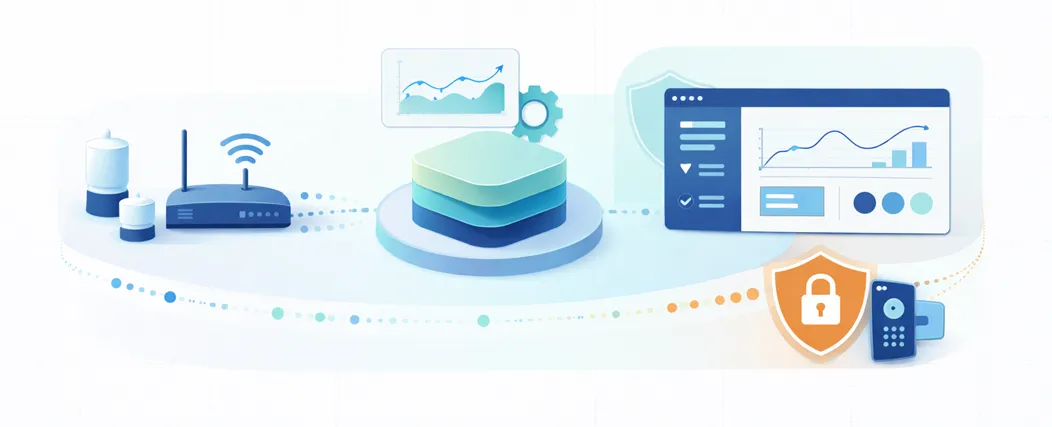
What are the 4 pillars of IoT
The four pillars of IoT are connectivity, data processing, user interface, and security. These fundamental components work together to create functional Internet of Things systems that can collect, analyse and act on data from connected devices.
Each pillar is essential for successful IoT technology implementation, and weakness in any area can compromise the entire system’s effectiveness and reliability.
What are the four fundamental pillars that make IoT systems work?
The four fundamental pillars of IoT technology are connectivity, data processing, user interface and security. These core components form the foundation that enables devices to communicate, process information, present insights and protect data throughout the entire IoT ecosystem.
Connectivity encompasses all the hardware and protocols that allow devices to communicate with each other and with central systems. This includes sensors that collect data, network infrastructure such as Wi‑Fi or cellular connections, and communication protocols that ensure reliable data transmission. Without proper connectivity, IoT devices cannot share the information they collect.
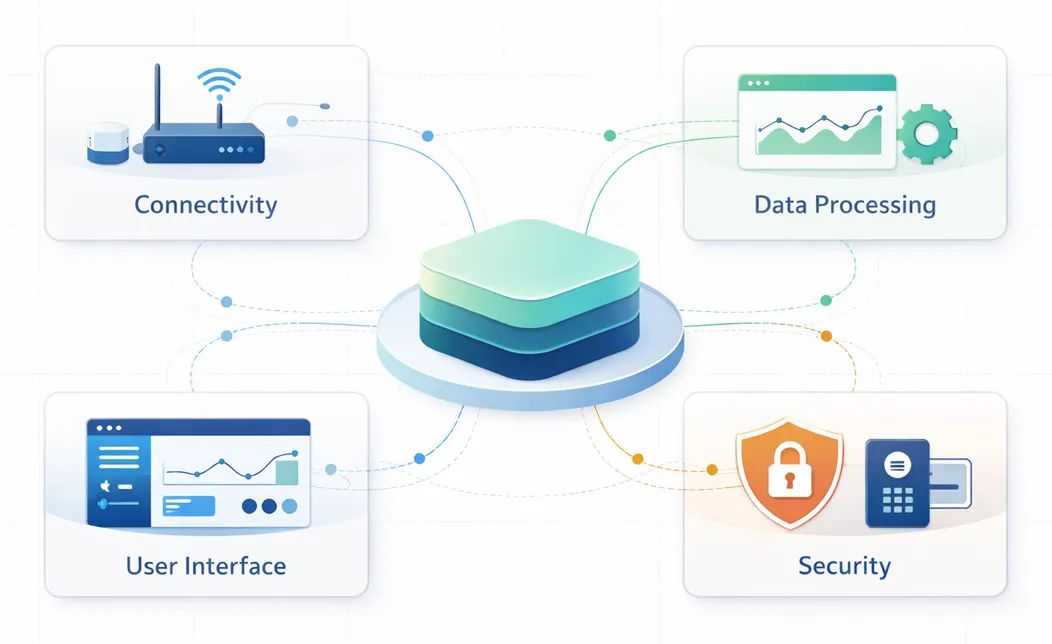
Data processing transforms raw sensor data into meaningful insights through cloud computing, edge computing and analytics platforms. This pillar handles the massive volumes of information generated by IoT devices, applying algorithms and machine learning to identify patterns, trends and actionable intelligence that drive business value.
User interface provides the means for people to interact with IoT systems through dashboards, mobile applications and visualisation tools. This pillar makes complex data accessible and understandable, enabling users to monitor systems, receive alerts and make informed decisions based on IoT‑generated insights.
Security protects the entire IoT ecosystem through device authentication, data encryption and network protection measures. This pillar ensures that sensitive information remains confidential, devices cannot be compromised, and the system maintains its integrity against cyber threats and unauthorised access.
How do connectivity and data processing form the backbone of IoT?
Connectivity and data processing create the fundamental infrastructure that enables IoT technology to function by establishing communication pathways and transforming raw data into valuable insights. These two pillars work together to collect, transmit and analyse information from connected devices across various environments and applications.
Connectivity components include sensors that detect environmental conditions, network infrastructure that carries data and communication protocols that ensure reliable transmission. Sensors might measure temperature, humidity, motion or pressure, while network options range from short‑range technologies such as Bluetooth to long‑range solutions such as cellular or satellite connections. The choice depends on factors such as power requirements, data volume and geographical coverage needs.
Different connectivity protocols serve specific purposes within IoT systems. Wi‑Fi provides high‑bandwidth local connections, while LoRaWAN offers long‑range, low‑power communication for remote sensors. Cellular networks enable mobile IoT applications, and Ethernet supports industrial environments that require stable, high‑speed connections.
Data processing transforms the continuous stream of sensor data into actionable intelligence through various computing approaches. Cloud computing provides scalable processing power for complex analytics, while edge computing processes data closer to devices for faster response times and reduced bandwidth usage.
Analytics platforms apply algorithms to identify patterns, predict failures, optimise performance and generate alerts when conditions exceed normal parameters. This processing capability turns simple sensor readings into business intelligence that can improve efficiency, reduce costs and enable new service offerings.
Why are user interface and security critical for IoT success?
User interface and security are essential for IoT success because they determine how people interact with systems and whether the technology can be trusted with sensitive data and critical operations. Without intuitive interfaces and robust security, even technically excellent IoT systems fail to deliver practical value or gain user adoption.
User interface design makes IoT data accessible and actionable through dashboards, mobile applications and visualisation tools. Effective interfaces present complex information in understandable formats, using charts, maps and alerts to highlight important trends and conditions. Mobile apps enable remote monitoring and control, while web‑based dashboards provide comprehensive system overviews for management and technical teams.
Good interface design considers the user’s context and needs, presenting relevant information without overwhelming detail. Real‑time alerts notify users of critical conditions, while historical data helps identify long‑term trends and optimisation opportunities. The interface should enable quick decision‑making and provide clear paths for taking corrective action.
Security measures protect IoT systems through multiple layers of defence, including device authentication, data encryption and network protection. Device authentication ensures that only authorised sensors and controllers can access the system, preventing unauthorised devices from injecting false data or gaining system access.
Data encryption protects information both in transit and at rest, ensuring that sensitive operational data cannot be intercepted or accessed by unauthorised parties. Network protection includes firewalls, secure communication protocols and regular security updates that address emerging threats and vulnerabilities.
Security becomes particularly critical as IoT systems scale, with thousands of connected devices creating multiple potential entry points for cyberattacks. Regular security audits, automated threat detection and incident response procedures help maintain system integrity and user confidence.
What happens when one of the IoT pillars fails or is missing?
When any of the four IoT pillars fails or is inadequate, the entire system’s performance and business value deteriorate significantly. Each pillar depends on the others, so weakness in one area creates cascading problems that can render the entire IoT technology implementation ineffective or unusable.
Connectivity failures prevent data collection and device communication, leaving systems blind to real‑world conditions. Poor network coverage results in data gaps that compromise analytics accuracy, while unreliable connections cause missed alerts and delayed responses to critical situations. Inadequate connectivity planning often leads to expensive retrofitting or complete system redesigns.
Insufficient bandwidth can create bottlenecks that delay data transmission, making real‑time monitoring impossible. Device compatibility issues prevent seamless integration, while protocol mismatches cause communication failures between system components.
Data processing limitations result in delayed insights, missed patterns and an inability to scale as device numbers grow. Without adequate processing power, systems cannot perform real‑time analytics, predictive maintenance or automated responses. Poor data‑quality management leads to unreliable insights that undermine confidence in decision‑making.
Inadequate storage capacity causes data loss, while insufficient analytics capabilities prevent organisations from extracting the full value from their IoT investments. Systems may collect vast amounts of data but fail to transform it into actionable business intelligence.
Poor user interfaces make valuable data inaccessible, leading to low adoption rates and missed opportunities for optimisation. Complex or confusing interfaces frustrate users, while the lack of mobile access prevents field teams from accessing critical information when needed.
Security weaknesses expose systems to cyberattacks, data breaches and operational disruption. Compromised devices can spread malware throughout networks, while data breaches damage customer trust and may result in regulatory penalties. Inadequate security often forces organisations to disconnect IoT systems, eliminating their business benefits entirely.
Next steps
1) Read about our customer stories
Browse short customer stories on what was built, what data was used, and what changed after launch.
2) Industry examples
Pick your industry to see typical use cases and starting points.
3) Contact us
Tell us your goal — we’ll suggest the right next step.